
When Made in Group surveyed hundreds of SME manufacturers across the UK at the end of last year and into the start of this year, two issues consistently rose to the top: skills and energy. The findings were stark. 78% of manufacturers said rising energy costs had a moderate or severe impact on their business over the previous 12 months, 26% said those costs were threatening the survival of their business, while 71% identified long-term energy price stability as the single biggest intervention government could make. Perhaps most encouragingly, if energy and input costs stabilised, 56% said they would reinvest into growth and hiring, while 53% would invest in new equipment and automation.
It was against this backdrop that manufacturing leaders gathered in Leeds earlier this month for Made in Yorkshire's most recent event, delivered in partnership with Clarion, to explore a more important question than simply how to reduce energy bills: how can manufacturers build long-term energy resilience? Bringing together perspectives from global technology leader Schneider Electric, long-standing MIY member, Sargent Electrical, energy consultancy Optimised and legal experts Clarion, the morning combined strategic insight with practical, real-world experience.
Understanding the changing energy landscape
The morning opened with Mike Wilkinson, Major Pursuits Director at Schneider Electric, who challenged delegates to look beyond today's energy market and consider the forces reshaping manufacturing over the coming decades.
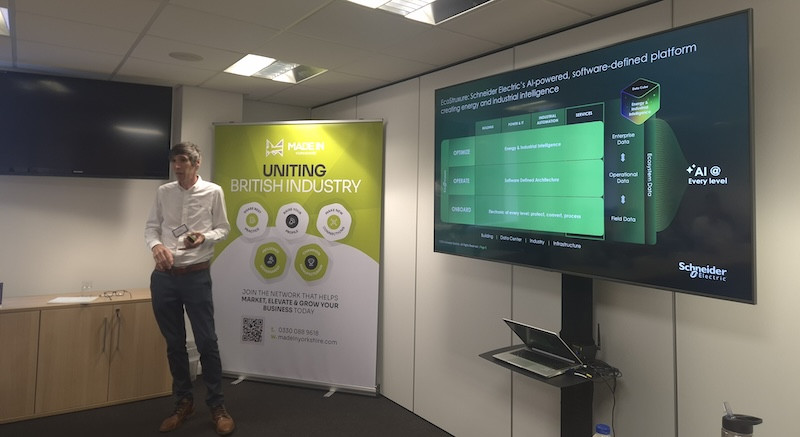
Rather than viewing energy purely as an operational cost, Mike outlined three interconnected megatrends that are fundamentally changing industry: the New Energy Landscape, Digitalisation and AI, and an increasingly Multi-Polar World. Together, these forces are transforming how manufacturers generate, consume and manage energy, while making resilience and adaptability increasingly important competitive advantages.
The discussion explored how technologies such as microgrids, intelligent energy management systems and AI-driven analytics are enabling manufacturers to take greater control of their operations. As energy generation becomes more decentralised, businesses will increasingly have opportunities to generate, store and optimise their own power, reducing dependence on volatile wholesale markets while improving operational resilience.
Delegates were also encouraged to think beyond today's technologies. From Sustainable Aviation Fuel (SAF), hydrogen and small modular nuclear reactors, the future energy landscape is set to become increasingly interconnected. Rather than viewing these technologies in isolation, Mike described a future where they work together as part of integrated industrial ecosystems, combining low-carbon power generation, carbon capture, hydrogen production and AI-enabled energy management. While many of these technologies remain several years from widespread deployment, the opportunities are significant, provided the policy environment gives businesses the confidence to invest.
From strategy to reality
If Schneider Electric painted the picture of where manufacturing is heading, Ian Sargent, Managing Director of Sargent Electrical, showed what that future can actually look like in practice.
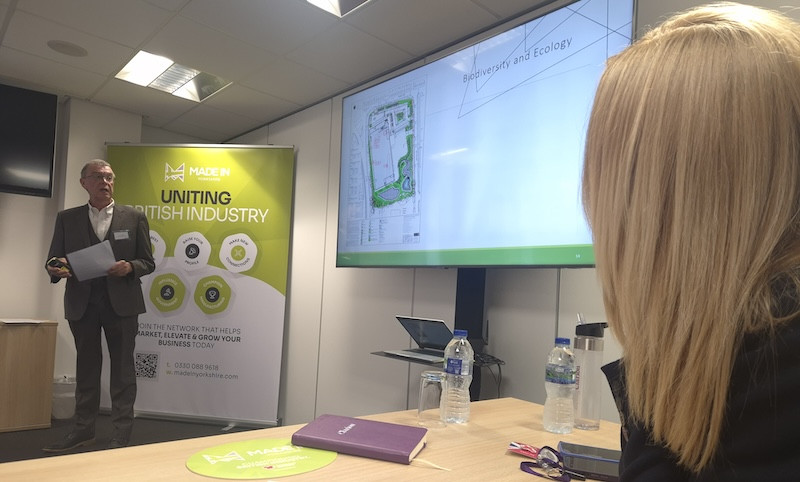
Using the company's new headquarters as a live case study, Ian explained that the project started with a deceptively simple question: what will our maximum energy demand look like? Once that was understood, every aspect of the building was designed around meeting that demand as intelligently and efficiently as possible.
Targeting BREEAM Outstanding accreditation — placing the facility amongst the top 1% of sustainable buildings globally — the new site has been designed to operate independently of the grid for around 95% of the time through a combination of 900kW of rooftop solar, 2MW of battery storage, air source heat pumps and intelligent energy management.
Perhaps Ian's most powerful insight, however, wasn't about any single technology. It was about integration. Lighting, HVAC, energy management, security and building controls have traditionally operated as separate systems. By bringing them together through a single Building Management System (BMS), enhanced by AI and thousands of connected sensors, the business will be able to predict demand, smooth energy peaks and continually optimise performance across the entire site.
Importantly, Ian acknowledged that not every manufacturer can justify an investment on this scale. His challenge to delegates wasn't to replicate the project, but to adopt the same mindset. Rather than asking how to shave a few percentage points from an electricity bill, businesses should be asking how they build facilities that remain competitive for the next 20 or 30 years. Much of what Sargent Electrical is investing in today, he reflected, is about creating a business that future generations will inherit, not simply solving today's challenges.
Turning insight into action
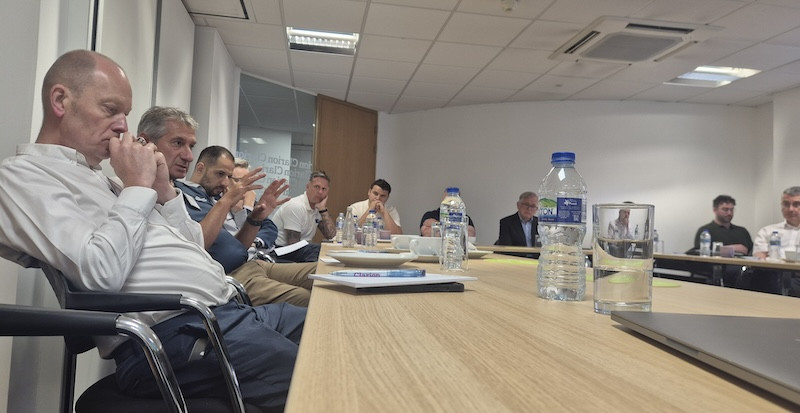
The panel discussion, expertly chaired by Sarah Hex, Head of Client Relationships at Clarion, focused on what manufacturers can do now, regardless of the size of their business or available investment.
Responding to questions from Sarah and delegates, James Wood, CEO of Optimised, encouraged manufacturers to look beyond the obvious efficiency measures and become much smarter about how energy is procured and managed. Rather than leaving contract renewals until the last minute, he advocated taking a longer-term view of energy purchasing while making better use of the operational data many businesses already have at their fingertips.
Adding a legal and commercial perspective, Christian Hellmund, Partner in Clarion's Energy, Projects & Infrastructure team, reinforced that there is no one-size-fits-all approach. Whether considering power purchase agreements, on-site generation or third-party funded infrastructure, he stressed the importance of choosing an energy strategy that reflects each manufacturer's operational requirements, commercial objectives and appetite for investment.
A recurring theme throughout the discussion was that technology itself is rarely the biggest barrier. More often, the challenge is embedding energy into strategic decision-making and creating a culture where operational teams, finance leaders and senior management all recognise energy as a driver of value creation, rather than simply another overhead to be controlled.
Looking ahead
While the technologies and investment journeys discussed throughout the morning varied considerably, one message consistently emerged: energy resilience is no longer just about reducing costs. It is about building smarter, more connected and more adaptable manufacturing businesses that are better equipped to thrive in an increasingly uncertain world.
There wasn't unanimous agreement on every topic discussed throughout the morning, and that was exactly what made the conversation valuable. Manufacturers are all starting from different places, facing different commercial realities and weighing up different investment decisions. But by bringing those experiences together, delegates left with a broader perspective on the changing energy landscape and practical ideas they could take back into their own businesses.